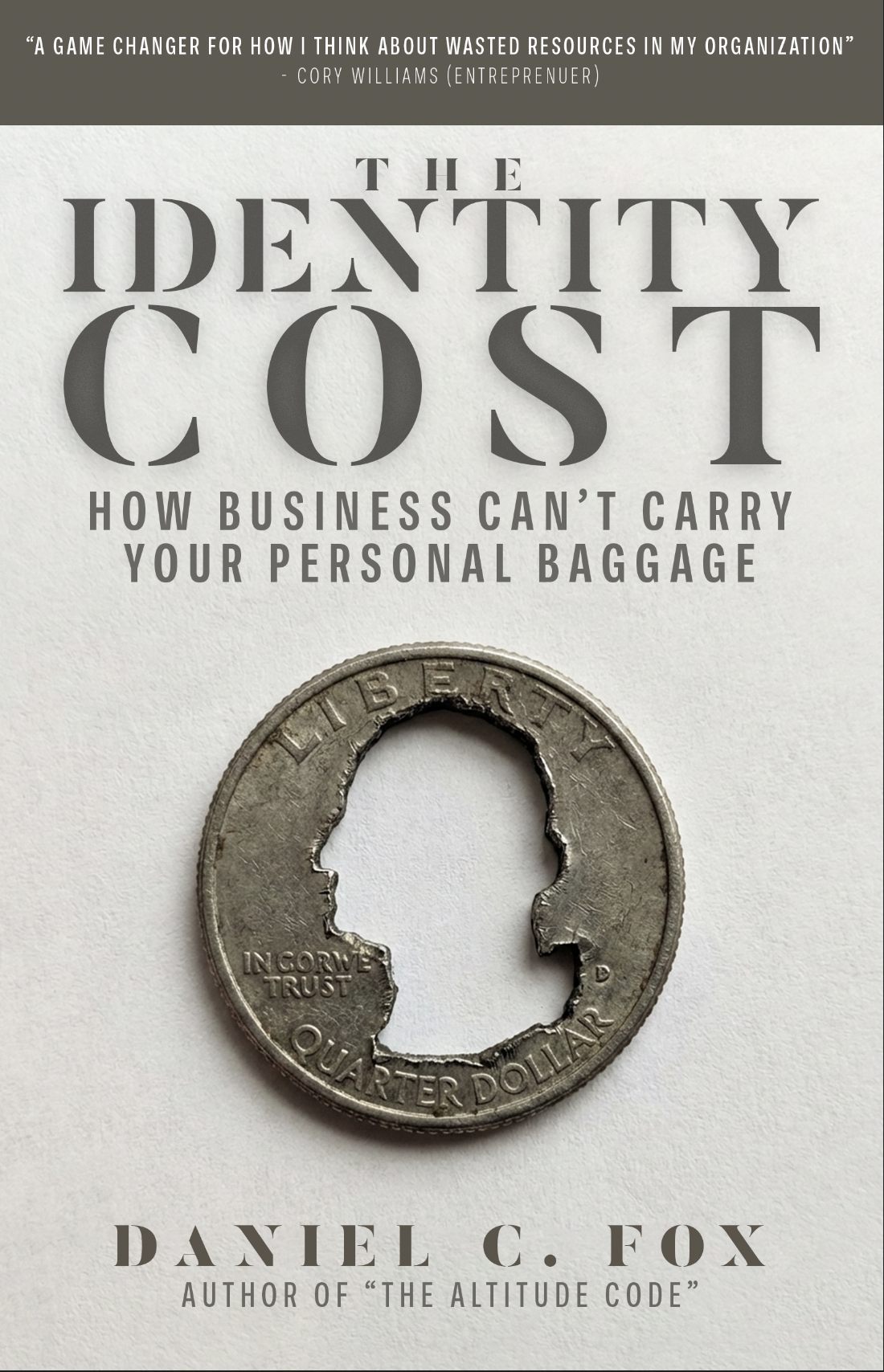
The Identity Cost
Every organization carries visible costs.
Time. Headcount. Capital. Opportunity.
There is another class of cost that rarely shows up anywhere formal.
It accumulates through ordinary decisions.
It travels through authority, structure, and process.
It consumes resources while remaining hard to name.
The Identity Cost model names this pattern.
It tracks what happens when personal needs move through roles that control people, money, or direction.
Where discretion exists, identity pressure has somewhere to land.
Where the Cost Comes From
Leaders are human.
Humans have needs.
Organizations concentrate resources.
When these three facts intersect, cost appears.
It does not show up as misconduct or failure.
It shows up as reasonable decisions that carry extra weight.
The model follows how unmet or overextended needs express themselves through legitimate work.
Multiple Vectors, One Effect
Identity Cost rarely enters through a single door.
It moves through several vectors at once.
Authority
Decisions slow.
Control tightens.
Approval layers thicken.
Structure
Roles multiply.
Ownership blurs.
Deletion becomes difficult.
Process
Meetings expand.
Reporting grows dense.
Explanations start doing emotional work.
Metrics
Numbers reassure.
Dashboards perform.
Signals replace contact with reality.
Each vector stands on its own. Together, they compound.
Why It Spreads
Once cost enters an organization, it travels.
Down the org chart and across teams into incentives, habits, and culture.
People adapt to what is rewarded, protected, and left unspoken. The organization stabilizes around the weight it is carrying.
Over time, the cost stops registering as cost. It becomes the way work gets done.
What Makes This Model Distinct
Most leadership thinking focuses on behavior.
This model follows where meaning is being sourced.
Inefficiency, fatigue, and drag appear here as consequences of something earlier.
When identity work is routed into structure and process, the business absorbs the expense.
What the Work Reveals
When identity cost becomes visible, capacity reappears.
Decisions lose mass.
Information sharpens.
Structure simplifies.
The business resumes doing one job.
The book, the conversations, and the advisory work all orbit this model.
The aim is recognition.
Teaching is incidental.
If This Feels Familiar
You are probably already paying this cost.
In effort. In complexity. In the sense that the organization feels heavier than its outcomes justify.
Recognition is enough to enter the work.